top of page

Plastic People is a photographic artwork inspired by the spirit of The Plastic People of the Universe, the legendary Czech underground band whose uncompromising creativity became a symbol of cultural freedom. Created from a temporary installation of translucent sweets arranged on a plate, the work uses sunlight, shadow, and transparency to transform everyday materials into luminous human-like forms.


'Plastic People' by Lukas Kroulik, 2026. Original photograph printed on recycled PET fabric (made from recycled plastic bottles), presented in a hand-painted bamboo hoop. Diameter: 30 cm.

The title also draws a deliberate contrast between past and present. The original “Plastic People” was harsh, confrontational music that protested against a Communist regime which sought to mould individuals into compliant, interchangeable objects.


Today, the pressures are different and often disguised beneath comfort, convenience, and consumer culture, yet they can be equally powerful in encouraging conformity. The sweetness of the materials used in the artwork reflects this shift: what was once an overt system of control has, in many ways, been replaced by subtler forces that can still turn people into “plastic” versions of themselves.

'Plastic People' by Lukas Kroulik, 2026 - "Nothing in this work is quite what it first appears to be: sweets become people, waste becomes fabric, light becomes substance, and a plate becomes a stage."

The photograph is printed on fabric made from recycled plastic bottles, allowing light to pass through the image and reinforcing its connection to transformation, sustainability, and renewal. Presented in a circular embroidery hoop, the piece references both the original plate and the handmade traditions of textile craft. By reimagining “plastic people” through recycled materials, fleeting light, and contemporary consumer materials, the work invites viewers to reconsider waste, value, individuality, and the creative potential hidden within the materials we often discard.


I’m delighted to share that my work Tide will be part of Future Folklore: The Art and Craft of Storytelling, presented by Visual Arts Scotland at the beautiful Maclaurin Art Gallery, 28 March – 27 May 2026.


The Maclaurin Art Gallery in Ayr, Scotland, is a highly regarded regional institution known for holding one of the best collections of 20th and 21st-century art in the country. Located in Rozelle Park, it is famous for hosting significant exhibitions, including those from the Royal Scottish Academy and the Society of Scottish Artists.


Key Aspects of Its Reputation:

  • Collection: Features a significant collection of modern art, including paintings, drawings, and sculptures from national and international artists.

  • Exhibitions: Regularly hosts high-profile exhibitions, including the Society of Scottish Artists' annual show.

  • Cultural Significance: Houses the 54-piece 'Tam o' Shanter' series by Alexander Goudie at nearby Rozelle House.

  • Partnerships: Works with organizations like the Royal Scottish Academy to display esteemed artworks.

  • Accreditation: Rozelle House, where the gallery is based, is an accredited museum, meeting UK standards for collections management. 


It is widely considered a key cultural venue in South Ayrshire, attracting visitors for its diverse exhibitions, workshops, and events, according to Destination South Ayrshire


Tide by Lukas Kroulik, 2026


Tide, Skye Tide, photographed on the Isle of Skye — a mesmerizing, mysterious piece shaped by wind, water, and time, presented in a wooden tray.


Tide by Lukas Kroulik, 2026

This mixed-media piece — a photograph from the Isle of Skye printed on Fuji gloss archival paper, embedded in eco-resin and presented in a wooden tray — reflects my ongoing fascination with Scotland’s landscape, folklore, and the stories carried by the sea.


Scotland’s myths and legends have travelled far beyond its shores, and it feels especially meaningful to exhibit a work inspired by Skye within this exhibition exploring how folklore continues to evolve.

I had a vision — and this is just the beginning.


Standing on Elephant Island, I kept thinking about Frank Hurley — not a sailor, but an artist among explorers, hauling large-format glass-plate cameras across ice and wind to document the expedition of Sir Ernest Shackleton. He built darkrooms in extreme conditions, protected fragile negatives, and carried the surviving plates back to the UK so the world could witness Antarctica. Today, I photographed Dominic Houlder here in colour — intentionally — as a dialogue with Hurley’s legacy.


A story of hope, endurance, art and belief in the impossible.


Dominic Houlder and the Houlder flag by Mount Frank Houlder, Elephant Island, Antarctica - photographed by Lukas Kroulik, January 2026.


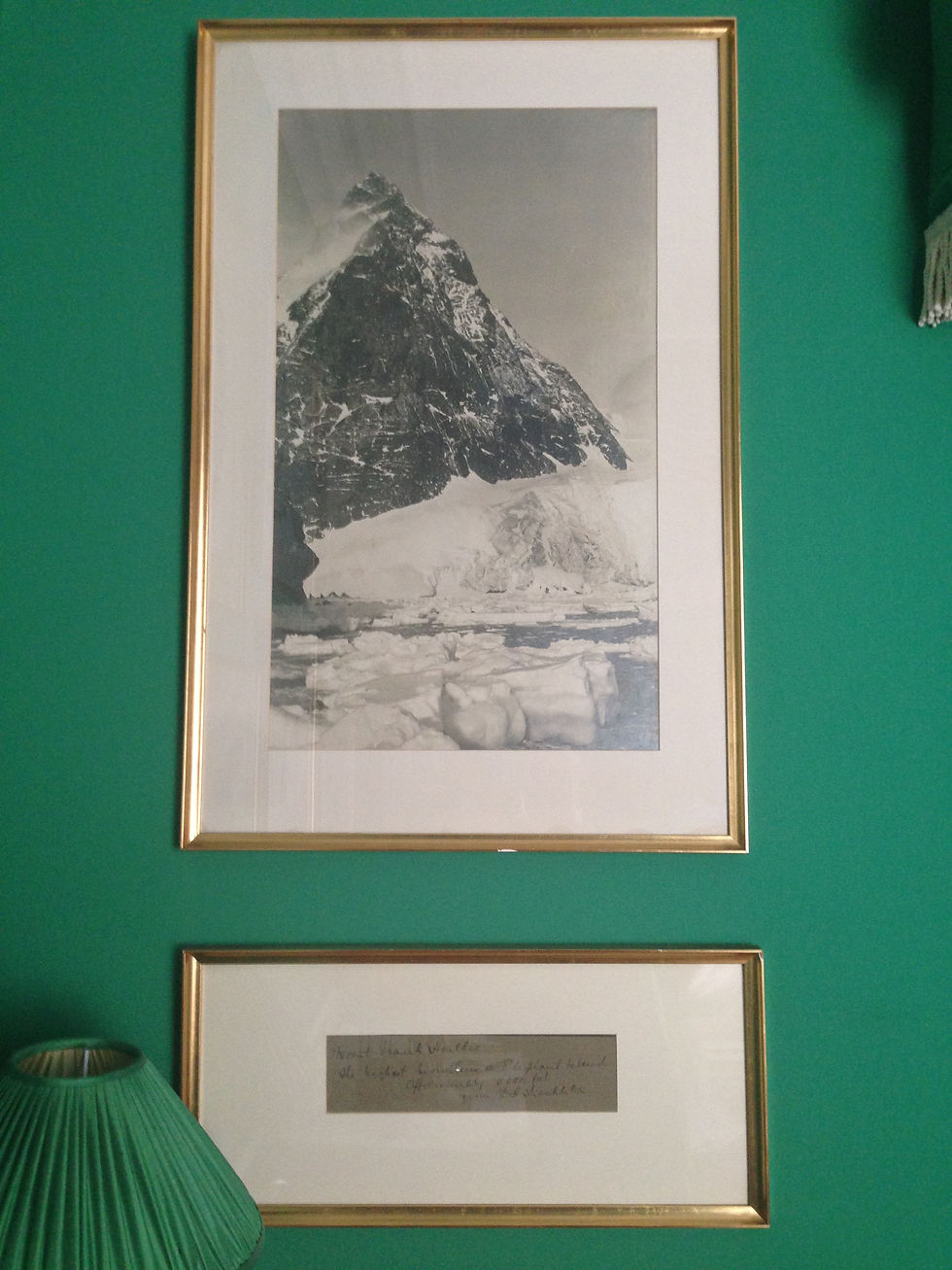
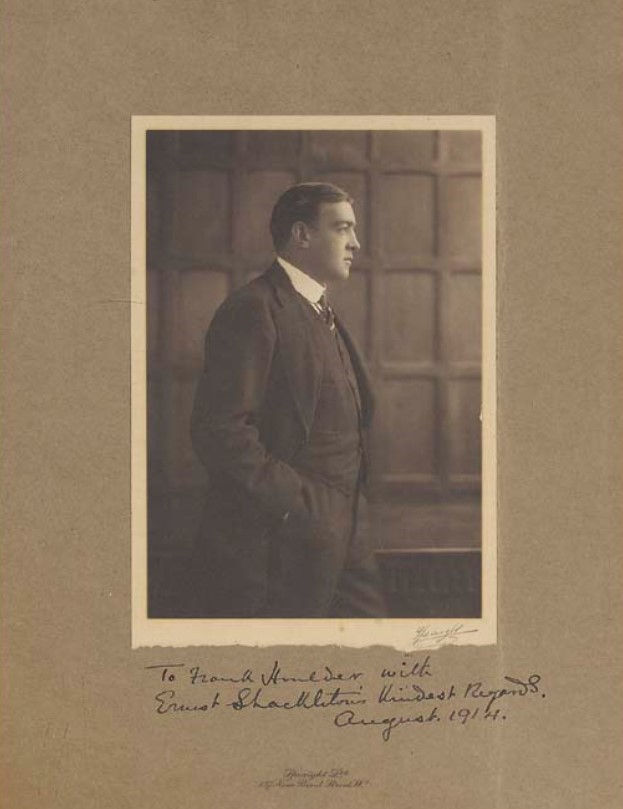
Here I have juxtaposed two images. On the right, against the green wall, the original 1914 photograph by Frank Hurley of the “Mount Frank Houlder” named by the Boss himself after Frank on the Elephant Island, Antarctica, with a handwritten dedication to Frank Houlder from Sir Ernest Shackleton. I took that image years ago because I couldn’t get over how deeply it moved me — the gratitude, the loyalty, the human bond behind the expedition.


On the left, my photograph from Elephant Island — created in dialogue with that moment in history. Not to replicate it, but to stand beside it. The juxtaposition is my way of holding past and present together — art, survival, friendship — and letting the emotion travel across time.


  • X
  • Black LinkedIn Icon

© 2023 by LUKAS KROULIK​

bottom of page